


Key benefits at a glance
- Faster comfort recovery when indoor temperatures deviate
- Smarter, asymmetric control – fast when comfort is at risk, gentle when easing off.
- More stable temperatures - reducing fluctuations.
- Better decision logic - avoiding optimisation when conditions are not suitable
- Greater flexibility - with access to adaptation zones even when self-optimisation is turned off
Why we improved the steering
In residential buildings, comfort is essential. When indoor temperatures drift outside the desired range, it's important that the system responds quickly – but without overcorrecting.
Previously, the self-optimisation of adaptation zones worked well for long-term adjustments, but it could be slow to respond to deviations. This meant that apartments could remain too cold or too warm for longer than necessary.
With our improved steering logic, Edge now responds more intelligently and efficiently to temperature changes.
What improved self-optimisation means for your buildings
The new self-optimisation balances two important needs:
- Fast return to comfort when temperatures move outside the target range
- Stable and smooth control to avoid unnecessary fluctuations and reduce wear on systems
The system now reacts differently depending on the situation. If more heating is needed, it responds faster. When temperatures are already close to the desired level, adjustments are made more gently. This helps maintain comfort while reducing unnecessary energy use.
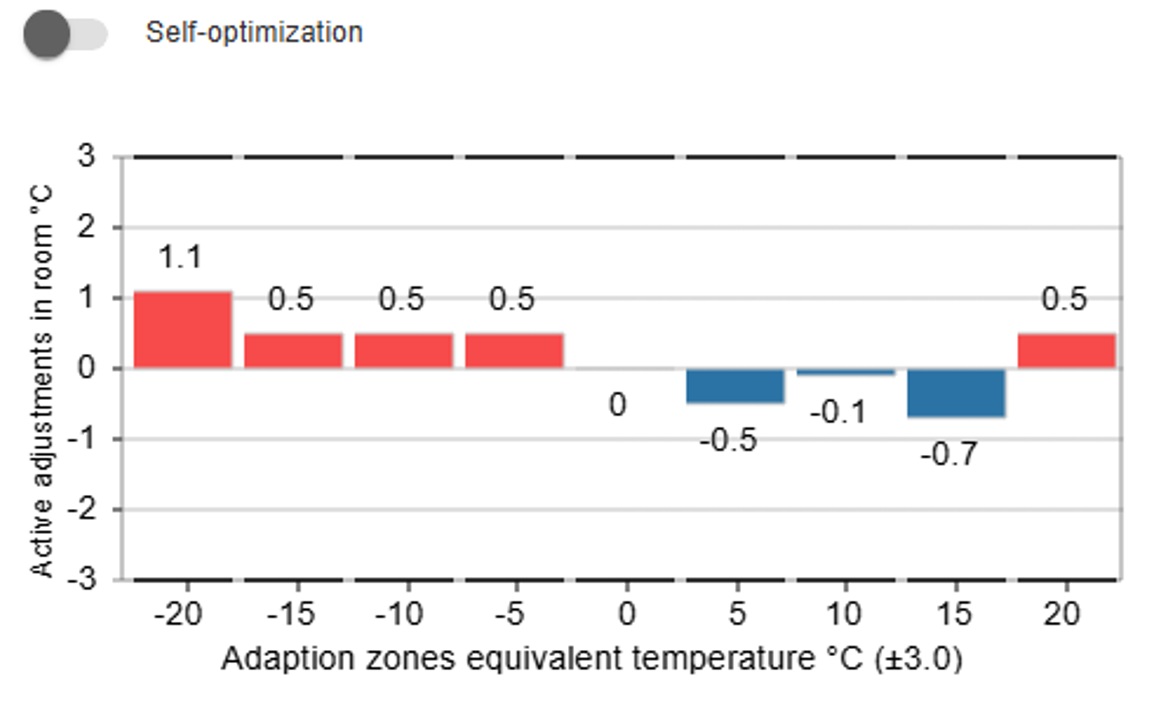
Smarter logic behind the scenes – without added complexity
Although the underlying algorithm has been significantly improved, it is still easy to use.
Edge evaluates how far the average indoor temperature is from the target range and adjusts the heating curve accordingly. Larger deviations trigger larger adjustments, while smaller deviations result in fine-tuning. Clear limits ensure that changes remain controlled and predictable over time.
In addition, the system has improved its activation criteria. Self-optimisation runs only when it makes sense – for example, when recent outdoor temperature data is available, and no conflicting settings are active. This helps avoid unwanted changes.
Improved visibility and control for users
Alongside the algorithm improvements, we have also made usability enhancements:
- Self-optimisation can be disabled while still allowing manual control of adaptation zones. You can turn off automatic self-optimisation to gain full manual control.
- When automatic self-optimisation is off, you still have access to manual control of adaptation zones and can adjust as needed without losing the tools you use to steer the building.
- You decide when the system should optimise on its own and when you prefer to set the settings yourself.
- The optimised curves are now always visible, so you can clearly see what the system uses for control and what is sent to the building's hardware. You can trust what you see on screen.
These changes make it easier to understand, explain, and trust the system's behaviour.
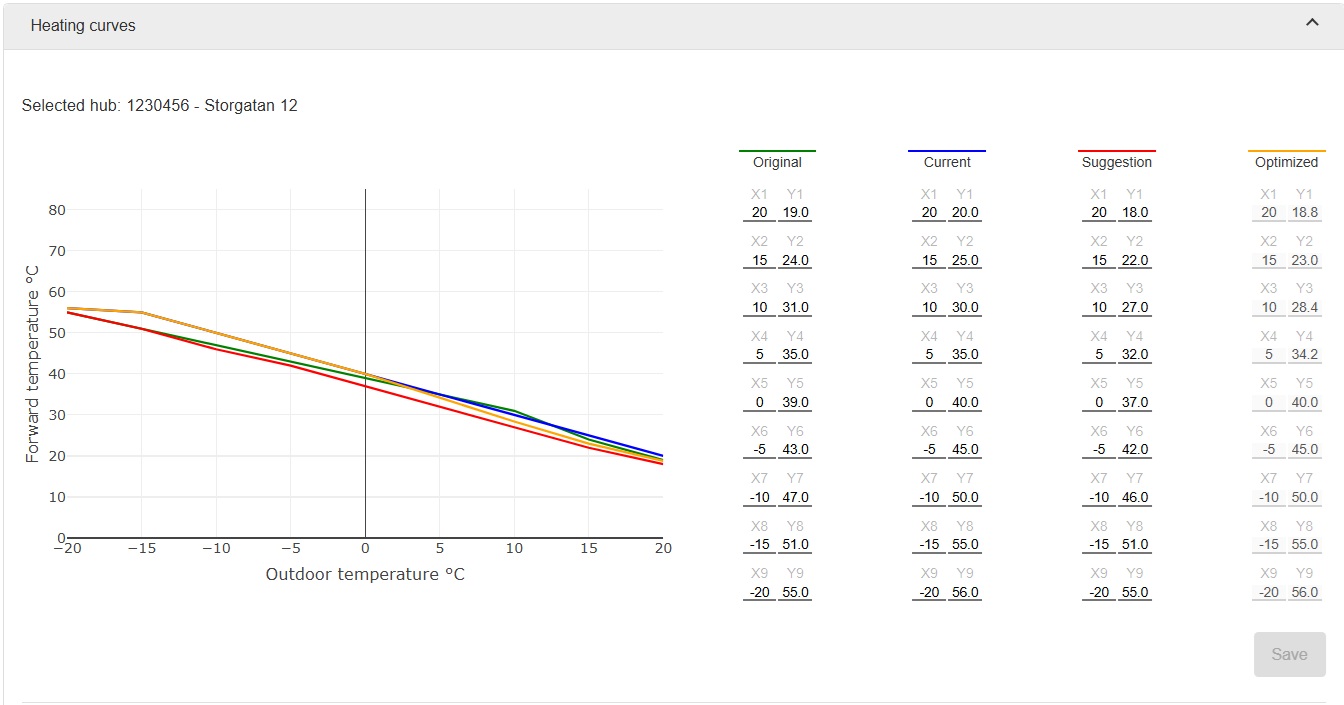
Proven in real buildings
The improved steering has been tested with a few customers for over a year before its general release. Experience from live installations demonstrates increased comfort, consistent performance, and reliable operation in everyday use.
What this means for property owners
For property owners, the improved self-optimisation means fewer complaints, clearer system behaviour, and easier deployment.
Apartments return to comfortable temperatures faster, with smoother operation and better long-term performance – without user complexity.

Wondering how this works in your specific buildings or how to best use adaptation zones in Edge?