

Whether you manage a single commercial building or an entire portfolio, energy costs are likely one of your biggest expenses. But your energy bill is not just about how much electricity you use; it's also about when you use it.
What is peak energy demand?
You can think of the electrical grid like a busy motorway. Most of the time, traffic flows smoothly. But during rush hour, everyone tries to use the road at the same time, causing traffic jams.
Peak energy demand works the exact same way. It is the specific time of day when electricity consumption across the grid is at its highest. During these hours, power plants must work at maximum capacity to meet the collective demand from homes, offices, and factories.
For commercial users, peak demand is also a billing metric. Energy suppliers often track the highest amount of power you draw during a specific interval – usually a 15- or 30-minute window – over a billing cycle. They then charge you a premium based on that spike. This means that a single, brief surge in your energy use can inflate your entire monthly bill, even if your overall consumption stays low.
Why does peak demand happen?
- Daily routines – people, businesses, and systems kick into high gear, typically at the same time during morning hours or late afternoon.
- Extreme weather – Cold snaps or summer heatwaves pushes systems to draw maximum power at once.
- Uncoordinated equipment use – If all your equipment runs on fixed schedules and starts at the same time, you create an artificial peak.
How to manage your energy peaks
Smart energy management is about timing and efficiency. Here are the best ways to flatten your curve;
1. Shift your heavy loads
Load shifting is the easiest way to cut peak costs. This means moving energy-intensive tasks to off-peak hours when electricity is cheaper and demand is low.
Do you have heavy equipment that runs daily? See if you can schedule it to run early in the morning or late at night. Even shifting a process by a few hours can move it out of the penalty zone on your energy bill.
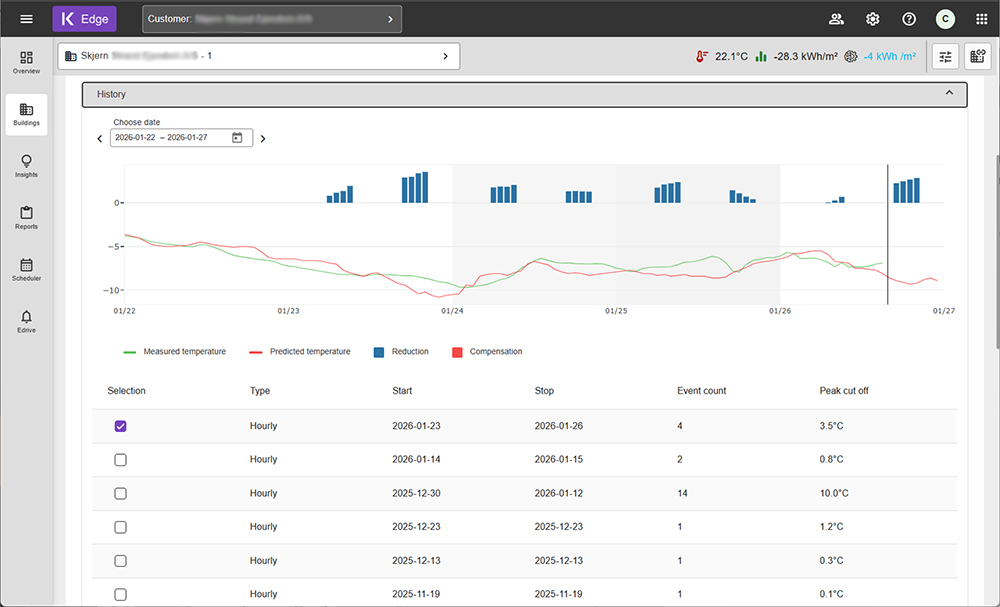
Weather is the biggest driver of unexpected energy spikes. If your building is not optimised to handle temperature shifts smoothly, your systems will draw maximum power all at once, leading to a costly demand spike.

2. Stagger equipment start-ups
In many commercial buildings, heavy machinery and HVAC systems run on fixed schedules. This start-up pulls a massive amount of power from the grid in a very short window. It is a common problem, but thankfully, it is one of the easiest to fix.
You can set your heating to turn on at 06:00, your ventilation at 06:15, and your heavy machinery at 06:30. This keeps your energy draw steady and flat, rather than creating a sharp, expensive spike.

3. Use smart technology and AI
You cannot manage what you cannot see. Installing smart sensors and energy management software gives you real-time visibility into your building's performance.
Many systems use AI or smart rules to learn how your building retains heat and uses power. This ensures you only use the energy you actually need, exactly when you need it.
4. Invest in energy storage
If your facility has battery storage, you can take advantage of the energy system and charge your batteries overnight when electricity is cheap. Then, when the afternoon peak hits and prices skyrocket, you switch your building to battery power. You avoid grid charges entirely during the most expensive hours of the day.
Flatten your energy curve
Optimising your energy demand is important for the whole energy system. By flattening peaks and shifting usage away from high-demand hours, you help balance the grid, ease pressure on infrastructure, and make it easier to make use of clean, renewable energy sources.
Small changes in how and when you use power can deliver massive savings on your next bill – and you don't have to figure it all out manually. The right software will do the heavy lifting for you by tracking your data and automatically making adjustments to keep your costs low.
See how you can take control of your energy use.