
When Hemsö hired its first Chief Digital Officer, Fredrik Hörnsten, in 2019, the goal was clear: digitalisation would not be a side track, but a central part of the company's strategy. Today, five years later, the work has gone from idea to reality – with a whole new way of understanding and managing buildings.
Hemsö owns and manages public buildings, including schools, retirement homes, and healthcare facilities in Sweden, Finland, and Germany. Through digitalisation, Fredrik Hörnsten sees the opportunity to increase efficiency and optimise resources, while strengthening sustainability goals.
"We link smart properties with finance and energy. And all these elements give us at Hemsö the analytical ability to make the right decisions to create a better company," he says.
One hundred different control systems
When the digitalisation journey began, the reality was anything but digital. The buildings had over a hundred different control systems, often with their own logins, interfaces and formats. There were even Excel lists with links to different systems.
The first step was to map the technology and create a common infrastructure and a digital work team. The next step was to build an open digital platform that could collect data from all these systems, regardless of supplier.
"This industry is very fragmented and diverse. When you buy a property, you get systems that you have to merge into a common tool."
Three interconnected parts
- The smart building – where heating, ventilation, and lighting systems are connected and can be controlled centrally.
- Digital twins – virtual models that make it possible to simulate operations, plan maintenance, and test improvements before they happen in reality.
- Data storage and analysis – a shared "data lake" where all information is collected, structured, and used as a basis for decision-making.
“These three parts are interlinked. We don’t see them as separate projects or silos, but as a coherent ecosystem,” says Fredrik Hörnsten.
Important pieces of the puzzle
An important piece of the puzzle in the smart building quest is the Web Port platform, which is used to connect and monitor the building's various control systems. It can bring together and create a shared picture – regardless of the technology that is installed.
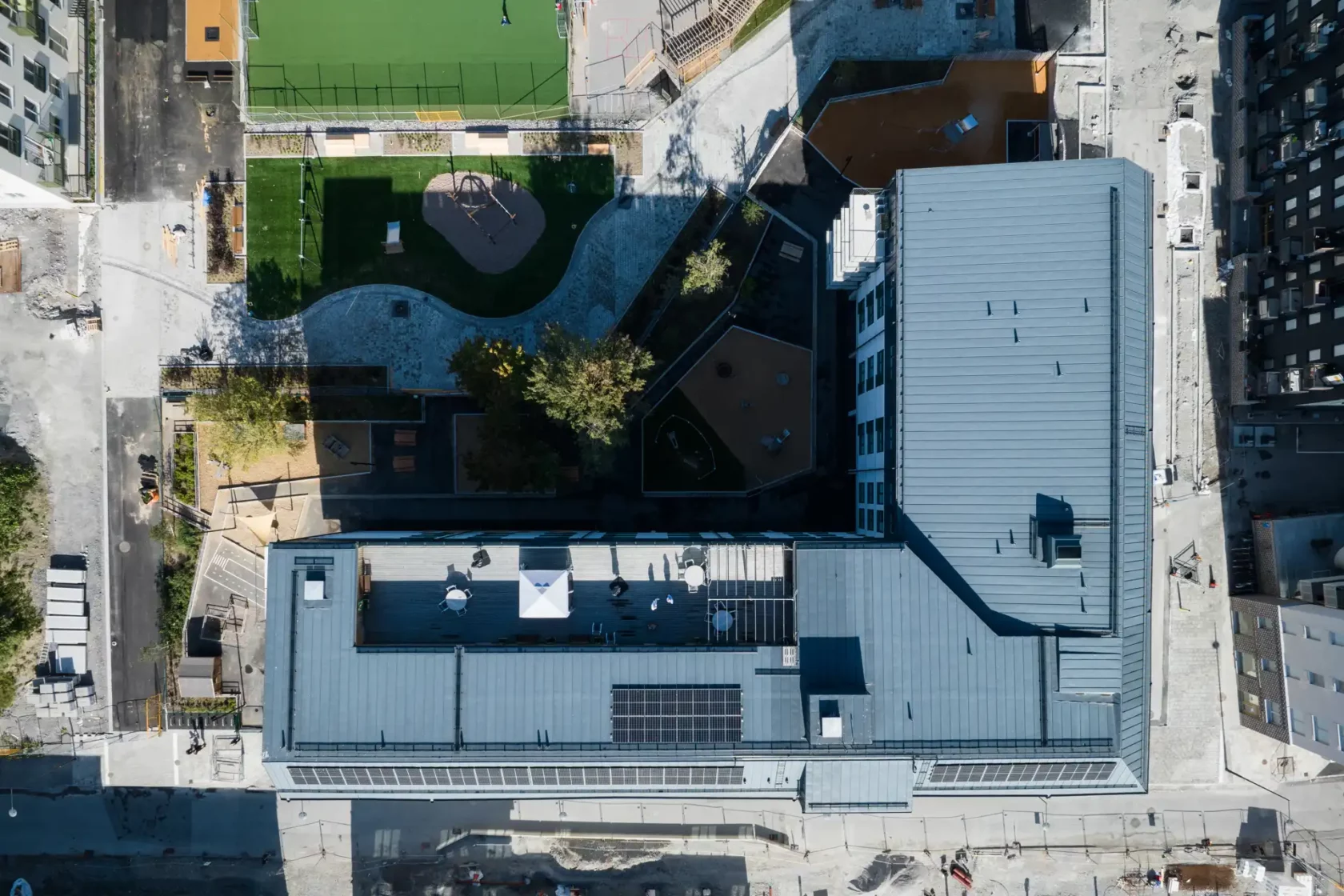
The platform is part of Hemsö's maturity ladder, which is an internal methodology for digitally upgrading each building.
In step one, the property has a basic digital infrastructure, such as the internet and a high-security network. In step two, digital access to the property is added, where Web Port plays a central role by communicating with the control system, collecting alarm and operating data, and enabling remote control. In step three, advanced data models from, for example, Vyer and Sinom are integrated, creating a cross-fertilisation of data that can be analysed at a deeper level.
Finally, in step four, Hemsö is collaborating with Myrspoven to enable AI to actively control the building. Web Port is a key component in both steps three and four, as the platform connects data and enables AI to communicate and act effectively.
You could say that Web Port acts as an integration bridge to more advanced data warehouses. That is its strength; it can talk to a diverse range of different systems and bring them together as one. In addition, the platform is well-liked in the industry – by our own operations staff and by external suppliers.
An open ecosystem of partners
Instead of locking itself into one supplier, Hemsö is building an open ecosystem of collaborations with several proptech companies and technical partners. This is so as not to "put all our eggs in one basket," as Fredrik says.
"If you are a partner of Hemsö, you have to stay on your toes – but then you can also go very far, says Fredrik Hörnsten with a smile."
He has built up a strong digitalisation team within Hemsö, but also works with several external consultants. These include OAKS, which is a partner of Kiona and certified in Web Port and helps Hemsö to install and integrate the system in its properties.
"They provide strategic support for our team and ensure that the integration is structured. We have one to two full-time resources who help us take all our properties to step two on the maturity ladder."
Digitization is an investment in sustainability and efficiency – but to succeed, hundreds of systems must speak the same language. Through Web Port and an open ecosystem, we are creating a platform that makes Hemsö's strategy a reality and opens the door to the smart buildings of the future.
Visions for the future
Thanks to a dedicated team, a clear mission from management, and a drive to move forward, there is room for further improvement. Hemsö is now investing heavily in installing sensors to measure indoor climate.
“When we know exactly how people in a school or nursing home behave, we can connect AI and bring in more data points, such as weather forecasts and energy prices. This will help us optimize even more. Then we can create a consistent and comfortable indoor climate while still reducing energy consumption.”
Ambitious goals
The goal is ambitious: by 2030, Hemsö aims to reduce its costs by at least SEK 50 per square meter, a total of around SEK 125 million per year. A large part of this will come from more efficient energy use, but also from smarter operations and better decision support.
"Digitalisation will also lead to more efficient working methods. This does not mean that we will be laying off employees. We can purchase and build more buildings, but we will not need to hire as many people at the same rate. We will simply continue to work smarter", concludes Fredrik Hörnsten.
Want to learn more about integrating effective steering tools?