

Buildings use about 40% of all energy in the EU and create around 36% of its energy-related greenhouse gas emissions. (Directive (EU) 2024/1275, Recital 6). To tackle this, the EU introduced the Energy Performance of Buildings Directive (EPBD) – the main set of rules for cutting the energy buildings use and the emissions they create.
Why does this matter now? The big rewrite of the directive landed in 2024 and is already in force, with the first deadlines approaching fast. If you own, manage, or operate buildings – from offices and shops to whole property portfolios – these rules will shape how you plan renovations, replace heating systems, and report on energy use.
In this blog post, you'll get a clear picture of what the EPBD is, why it matters, the key requirements you need to meet, the deadlines to watch, and the practical steps you can take now to get ready.
What is the EPBD?
The EPBD is the EU's main set of rules for cutting the energy buildings use and the emissions they pump out. It first appeared back in 2002, then got tweaked over the years. The big rewrite landed in 2024 as Directive (EU) 2024/1275, which came into force on 28 May that year. (European Commission, Energy Performance of Buildings Directive)
Brussels sets the broad targets. Each country then writes its own version into national law, tailored to its weather, its buildings, and its quirks. So the rules aren't identical everywhere, but they all push the same way.
The main aim is simple: make all buildings – old and new – as energy efficient as possible.
Here are the main goals of the EPBD:
- Achieving a zero-emission building stock by 2050.
- Setting minimum energy performance standards (MEPS) for all buildings.
- Phasing out fossil fuel boilers, starting with subsidies from 2025.
- Making solar installations standard on new buildings.
Why the EPBD matters for building owners and managers
Buildings are the biggest single energy consumer in Europe. Around 40% of the energy used in the EU goes into buildings, and they account for roughly 36% of energy-related greenhouse gas emissions. (Directive (EU) 2024/1275, Recital 6)
On top of that, about 75% of EU buildings still perform poorly when it comes to energy. That means wasted energy, higher bills, and more emissions than we need.
The EPBD brings in rules that will directly affect how you run your buildings. The directive covers four main areas: renovation, decarbonisation, modernisation and digitalisation.
Key EPBD requirements
1. Renovation comes first – minimum energy performance standards (MEPS)
Most of Europe's buildings already exist, and many are old and inefficient.
The directive asks each country to make a plan for fixing up the least energy-efficient buildings. For non-residential buildings, like offices and shops, this means the worst 16% have to be renovated by 2030, and the worst 26% by 2033. (European Commission, Energy Performance of Buildings Directive)
2. Energy performance certificates (EPCs)
You've probably seen an energy performance certificate, or EPC.
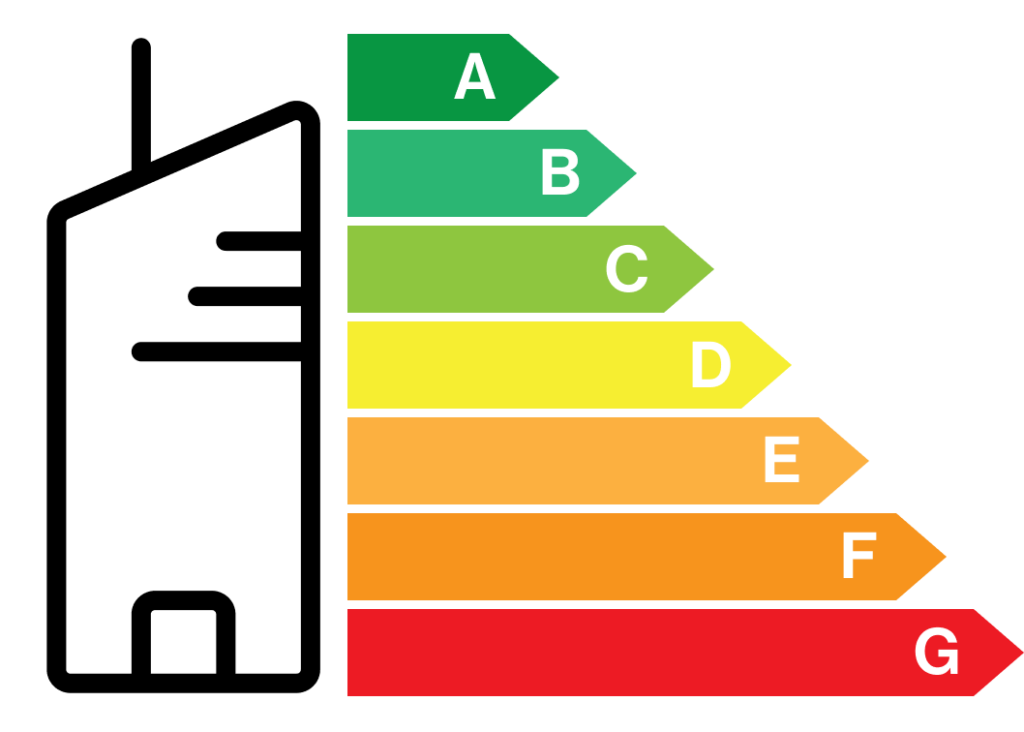
The directive sharpens these up and puts them on a shared EU template. Class A means a zero-emission building; G covers the very worst performers in the stock.(Directive (EU) 2024/1275, Recital 14 and Article 19)
Why does that matter to you? A clearer, comparable label helps when you're buying, renting, or selling. It also gives banks a straightforward way to spot which buildings are worth lending against.
3. Phasing out fossil fuels
The directive sets a deadline to stop using heating systems that run on fossil fuels. The aim is to end the use of standalone fossil-fuel boilers by 2040, so buildings will need to move away from coal-, oil-, or gas-fired boilers. (Annex II, template for the national building renovation plans, Directive C (f).
This means you'll need to plan ahead and look at options like heat pumps, connecting to local district heating, or other renewable energy solutions.
4. New buildings: zero-emission and solar-ready
Building something new? The standard is changing. Under the directive, all new buildings should be zero-emission from 2030, and new public buildings from 2028. (Directive (EU) 2024/1275, Article 7 a&b)
New buildings must also be "solar-ready", meaning they're designed to easily host solar panels later on.

Important EPBD deadlines and timeline
The directive rolls out in stages, so it helps to know what's coming and when. Here are the key milestones to keep on your radar:
- 2024: The recast EPBD enters into force (28 May).
- 2025: Subsidies for fossil fuel boilers start to be phased out.
- 2028: New public buildings must be zero-emission.
- 2030: All new buildings must be zero-emission. The worst 16% of non-residential buildings must be renovated.
- 2033: The worst 26% of non-residential buildings must be renovated.
- 2040: All buildings must replace boilers running on coal, oil, or gas.
- 2050: A fully zero-emission building stock across the EU.
These dates arrive sooner than they look. The earlier you map your buildings against them, the more room you have to plan and budget.
What building managers should do now
You don't need to fix everything at once. But you do need a plan based on facts, not guesses. Start with these steps:
- Review your current EPC and energy data for each building.
- Identify the worst-performing assets in your portfolio.
- Assess any heating systems still running on fossil fuels.
- Build a phased renovation roadmap tied to the deadlines above.
- Check your monitoring, automation, and reporting capabilities.
- Account for how your country is putting the directive into national law
Work through these steps in order of priority, starting with your worst-performing buildings and nearest deadlines. A good first move is to check how your building performs now, then turn what the data shows into a clear, costed plan with owners and timelines for each action.
Turning regulation into opportunity
Compliance isn't just about renovations and deadlines – it also depends on how well you run your buildings day to day. That's where technology comes in. The EPBD encourages building managers to use building automation and control systems (BACS) to keep an eye on energy use at all times, spot waste quickly, and adjust settings automatically to save power. For larger commercial buildings, these systems are set to become a requirement.
Digitalisation is no longer a "nice to have" – it's essential. To meet these new standards, you need continuous insight into how each building performs. This is tough when data is scattered across different systems.
What connected building data helps you do
Good data turns compliance from a guessing game into a clear, manageable plan. Use a smart building platform to make upgrades easier and keep you in control every step of the way. Our platform, Kiona, brings all your energy and building data together so you can monitor performance, simplify upgrades, and meet EPBD requirements with confidence. It connects to your existing systems to help you optimise energy use and the indoor climate, giving you the portfolio-wide analysis you need.

Learn how our platform is integrated in a variety of buildings